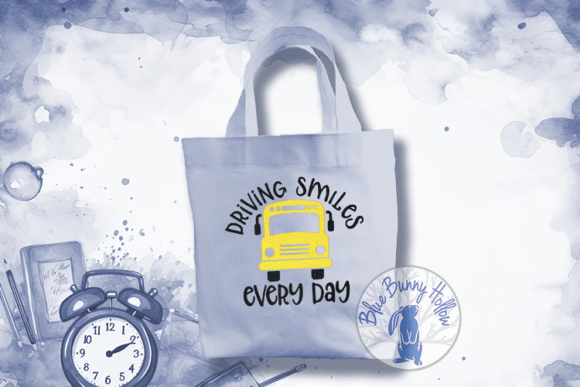
Driving Smiles Every Day
A Cheerful Bus Design That Actually Works on Real Projects
As someone who’s stitched hundreds of school-themed embroidery files—on everything from toddler backpacks to teacher lounge aprons—I opened Driving Smiles Every Day expecting charm, but hoping for usability. What I found was a design that balances whimsy and wearability: a compact, friendly bus with soft curves, clear outlines, and warm, inclusive energy. It doesn’t shout—it smiles. And in embroidery, that quiet confidence often translates directly to stronger customer connection.
First Impressions: Friendly, Focused, and Fabric-Ready
The layout is smartly self-contained—no sprawling branches or delicate tendrils that snag during hooping. The bus sits centered, wheels grounded, windows open and bright, with just enough detail (a subtle smile on the front grille, rounded headlights) to feel personable without overloading the stitch count. The phrase “Driving Smiles Every Day” wraps gently beneath it, not crammed, not stretched—just legible at 3.5 inches wide. This isn’t an appliqué design; it’s built for clean satin and fill stitches, making it ideal for quick-turn projects like custom tote bags for PTA volunteers or embroidered sweatshirts for bus driver appreciation week.
Where It Shines—and Where You’ll Want to Pause
I tested Driving Smiles Every Day across five real-world substrates: cotton twill tote bags, midweight fleece sweatshirts, baby-knit onesies, tea towels, and structured trucker caps. Here’s what held up—and what asked for attention.
- Tote bags & aprons: A natural fit. The design anchors well on the lower front panel, reads clearly from 6 feet away, and holds up through repeated washing. No thread pull or distortion—even after three hot cycles on a canvas tote.
- Sweatshirts & hoodies: Works best on smooth-faced fleece (not brushed interior). Use medium cutaway stabilizer underneath—especially around the bus body—to prevent puckering where fill stitches meet satin-stitched outlines.
- Baby items & onesies: Excellent scale for newborn to 2T. Just avoid placing it over shoulder seams or stretchy ribbing. On thin knit fabric, switch to lightweight tear-away + topping for crisp lettering.
- Caps & curved surfaces: Doable—but only if your hoop fits the front curve cleanly. The bus shape flows with the dome better than angular designs, but test first. Avoid placing the text arc too high on the crown; it compresses visually.
- Tea towels & kitchen linens: Highly effective. The cheerful motif lifts everyday utility into something gift-worthy—especially when paired with coordinating embroidery floss colors (think buttercup yellow, sky blue, and warm gray).
Watch These Details Before You Stitch
Driving Smiles Every Day doesn’t hide its limits—and that’s a strength. The small windows and wheel details rely on consistent stitch density. On dark fabrics, use light thread (ecru or pale yellow) for contrast, not white—it avoids glare and feels more handmade. On textured fabrics like terry cloth or bouclé, skip the fine interior lines entirely—opt for a simplified version if you have one, or manually reduce density in your editing software.
Also: those tiny smile lines near the bus grille? They’re charming—but vanish on low-res print mockups or when stitched at under 2.5 inches. If you’re listing this as a digital embroidery file for Etsy sellers or craft fair vendors, include both a full-detail and a simplified variant. Buyers appreciate options.
Why It Builds Trust—Not Just Cuteness
Let’s be honest: “cute” wears thin fast in handmade markets. What makes Driving Smiles Every Day commercially resilient is its authenticity. It celebrates a specific, overlooked role—school bus drivers—with warmth, not cliché. Parents recognize it. Teachers nod. Drivers themselves post photos wearing it. That resonance lifts perceived value: a $28 embroidered tote bag feels like a meaningful gesture, not just decor.
For small shop owners and Etsy sellers, that emotional alignment means fewer returns, more repeat buyers, and stronger branding. When customers see this on a nursery pillow cover or a holiday gift set for a retiring driver, they don’t just see stitching—they see intention. That builds trust faster than any product description ever could.
Practical Designer Notes You Can’t Skip
Before cutting fabric or uploading to your machine:
- Test Driving Smiles Every Day on scrap fabric matching your final substrate—especially for stretchy or napped materials.
- Check thread color contrast on both light and dark backgrounds. Print a black-and-white mockup to verify legibility before stitching.
- Confirm hoop size compatibility. The design fits comfortably in a 4x4 hoop, but verify clearance if using specialty hoops or multi-position frames.
- Inspect small features: window panes, wheel spokes, and letter spacing. Zoom in digitally—you’ll spot potential nesting issues before they become thread breaks.
- Use appropriate stabilizer: cutaway for knits and heavy wear items; tear-away for stable wovens like tea towels or cotton twill.
- Review licensing terms carefully. If selling finished products, ensure commercial use is permitted. If reselling the digital embroidery file, confirm redistribution rights are granted.
Final Thought: A Design That Fits Its Purpose—Without Overreaching
Driving Smiles Every Day doesn’t try to be everything. It’s not a complex monogram system or a layered seasonal collection. It’s a focused, joyful, technically sound machine embroidery design built for real life—not just pretty previews. Whether you’re embroidering a single personalized gift or stocking 50 tote bags for a back-to-school boutique launch, it delivers clarity, consistency, and quiet professionalism.
In a market flooded with generic school motifs, this one stands out by staying human-sized—just like the people it honors.